Montessori Philosophy as a Framework for Dignified Accompaniment in Ageing
Introduction
Ageing is an inherent process of the human condition that accompanies living beings from their origin to the end of life. It does not constitute an isolated event nor a stage disconnected from development, but rather a vital continuity in which fundamental human needs are expressed, transformed, and re-signified. Within this context, Montessori philosophy offers a valuable theoretical and practical framework for understanding and accompanying the ageing process, particularly in situations of frailty or dementia.
More than an educational method, Maria Montessori’s proposal can be understood as an anthropological philosophy that recognises the intrinsic dignity of the person throughout the entire lifespan. This perspective provides an integrative vision that articulates scientific, pedagogical, and ethical foundations, allowing for person-centered approaches to care and accompaniment rather than practices focused exclusively on functional or cognitive deficits.
Montessori as a Philosophy of Life and Accompaniment
Montessori philosophy transcends the field of childhood education and extends as a way of understanding the human being as continuously developing. From this perspective, ageing is not conceived solely as a process of loss, but as a stage in which the needs for meaning, belonging, participation, and recognition remain present.
Maria Montessori stated, “Do not follow me; follow the child,” emphasising the importance of observing and respecting the authentic expressions of the person in their developmental process. When applied to the accompaniment of adults and older persons, this principle may be reformulated as: “Do not follow the caregiver; follow the person.” It is the individual who guides the process of accompaniment through their interests, preferences, rhythms, and ways of relating, even when cognitive capacities are compromised.
From this standpoint, care moves away from standardised models and becomes a relational, ethical, and deeply respectful process of individual uniqueness. Accompanying does not mean caring for another according to one’s own criteria, but rather recognizing and responding to how that person wishes to be accompanied in the present moment.
Dignity and Person-Centred Care
Dignity is not lost with age or with a diagnosis of dementia; however, it may be eroded by care practices that prioritise efficiency, overprotection, or infantilisation. The Montessori approach proposes a model of person-centred care that acknowledges the individual’s intrinsic value, life history, and capacity for participation, even within contexts of dependency.
Accompaniment from this perspective seeks to foster experiences in which the person feels safe, accepted, valued, and recognised. When these conditions are present, the bond between the person accompanying and the person accompanied is strengthened, and care becomes a mutual experience of learning and growth.
The Three Fundamental Pillars of the Montessori Approach to Ageing
The application of Montessori philosophy to the accompaniment of older adults is structured around three interdependent pillars: the prepared adult, the person being accompanied, and the prepared environment. This triangular model supports a comprehensive, dignity-centred approach to care.
The Prepared Adult
The adult who accompanies must develop reflective self-awareness and assume responsibility for their own well-being. Within the Montessori framework, the prepared adult is not defined by authority, but by their capacity for observation, self-knowledge, and emotional regulation.
The holistic care of the caregiver—encompassing physical, emotional, mental, and spiritual dimensions—is a necessary condition for offering dignified accompaniment. Recognising personal limits, seeking support, and maintaining spaces for self-care not only prevent burnout but also enhance the quality of the caregiving relationship. From this perspective, care is no longer understood as sacrifice, but as a conscious and sustainable practice.
The Person Being Accompanied
The Montessori model of person-centred care emphasises the importance of deeply knowing the individual who is being accompanied: their life history, interests, social roles, preserved abilities, and sources of meaning. This knowledge enables the creation of meaningful experiences tailored to the singularity of each person. The person being accompanied acts as the guide of the process. Their responses, preferences, and needs orient the caregiver’s decisions, acknowledging that what is meaningful may vary between individuals and change over time. This principle reinforces respect for relational autonomy and dignity, even within contexts of dependency.
The Prepared Environment
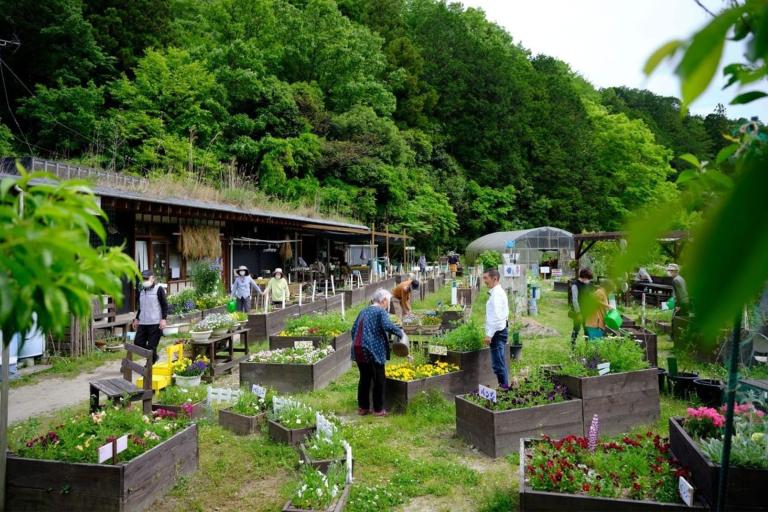
Within Montessori philosophy, the environment plays an essential role as a mediator of development and well-being. In the accompaniment of older adults, the environment must address both physical and psychological dimensions of care.
A physical environment that is clean, accessible, aesthetically cared for, and predictable supports orientation, autonomy, and safety. In parallel, a psychological environment characterised by respectful presence, human warmth, and the absence of judgment contributes to emotional stability and a sense of belonging. The prepared environment thus becomes a sustaining element of dignity and personal identity.
Human Needs and Meaning Across the Lifespan
Montessori philosophy recognises that, beyond basic needs, there are spiritual and social human needs that persist throughout life: the need to feel useful, to belong, to contribute, to love, and to be loved. These needs do not disappear with age or dementia, and their fulfilment has a direct impact on quality of life.
Furthermore, Montessori invites a preventive reflection: how present decisions and attitudes influence one’s own ageing process, and how conscious care of oneself, of others, and of the environment can foster more dignified and humane life trajectories.
Conclusion
Adopting Montessori philosophy as a framework for accompanying ageing implies a paradigm shift: moving from a loss-centred perspective to one focused on possibilities, relationships, and dignity. While the ageing process may involve significant challenges, this philosophy reminds us that human beings retain, until the end of life, the capacity to relate, to learn, and to find meaning.
From this perspective, accompaniment becomes an ethical and human act that honours the nature of the person and recognises the value of every stage of life. The Montessori proposal not only transforms care practices, but also reshapes how we understand ageing and our own human condition.